TLDR
- Bitcoin and Ethereum exchange-traded funds (ETFs) are experiencing ongoing outflows as investors shift capital toward international markets.
- U.S. investors have redirected funds into global equity ETFs excluding the U.S. at an unprecedented rate.
- Increasing Treasury yields and broader macroeconomic conditions are driving investors away from crypto ETFs.
- Bitcoin and Ethereum ETFs have registered a notable decline in assets during 2026.
Over the last few weeks, U.S.-based Bitcoin and Ethereum ETFs have faced continuous outflows. Total assets held by these funds have fallen sharply, indicating a significant change in investor behavior. Rather than supporting upward market momentum, the outflows from crypto ETFs are putting additional strain on the wider cryptocurrency sector. At the same time, international equity ETFs—especially those not based in the U.S.—have recorded a large surge in inflows.
Outflows from US Bitcoin and Ethereum ETFs
Since the start of 2026, U.S. Bitcoin and Ethereum ETFs have seen their asset values decline. Bitcoin ETF assets have plummeted from nearly $115 billion to roughly $83 billion, while Ethereum ETFs have experienced an even steeper drop—falling from around $18 billion to $11 billion. This trend signals a clear shift, with institutional investors pulling capital out of U.S.-domiciled crypto assets to invest in international markets.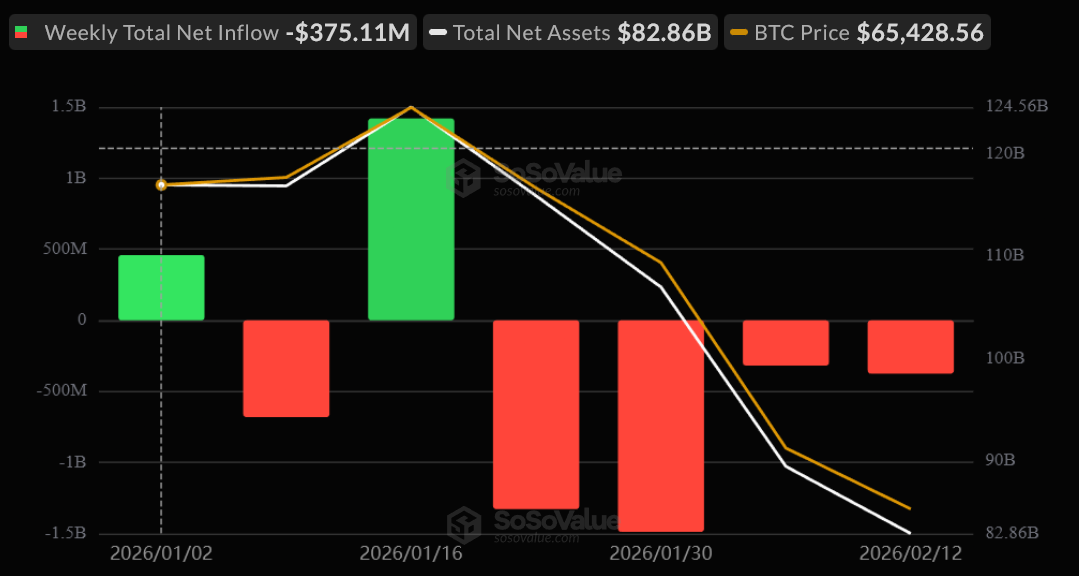
The factors behind these outflows are tied to larger economic trends, including climbing Treasury yields and reduced liquidity. The strength of the U.S. labor market has also influenced investors to prioritize safer assets like bonds. As Treasury yields rise, risky assets such as cryptocurrencies become less appealing, leading investors to shift their money into international equities and more secure, income-generating investments.
Shift Toward International Equity Markets
While U.S.-based Bitcoin and Ethereum ETFs are losing investor capital, international equity ETFs are seeing inflows at record levels. January 2026 witnessed an extraordinary jump in investments into global equity funds excluding the U.S., with these funds taking in a big chunk of total ETF inflows even though they make up a smaller part of the overall ETF market.
This move toward international markets shows a growing preference for equities in regions that offer relatively lower valuations and improving macroeconomic circumstances.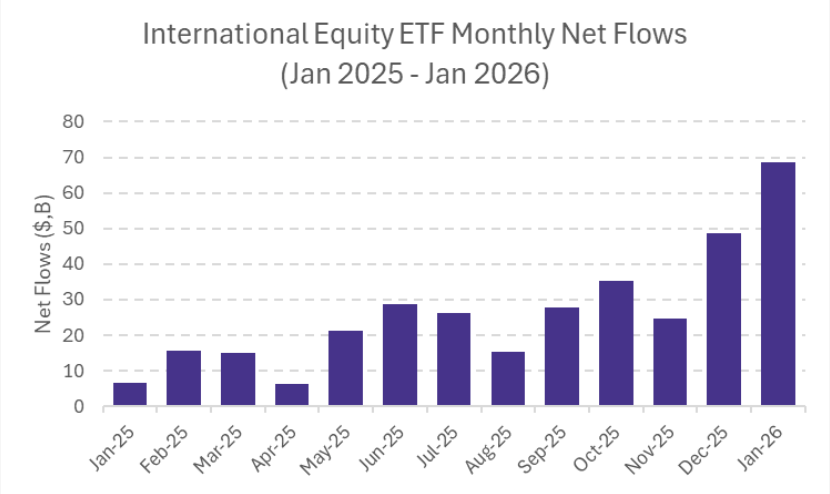
This increasing interest in foreign markets underscores a major shift in institutional investors’ portfolios. As many investors cut back their exposure to crowded U.S. growth sectors, they’re reallocating funds to international markets where economic conditions are more favorable. The shift to international equities also comes as inflationary pressures ease in several non-U.S. markets, making those assets more attractive for investment.
Impact of Rising Treasury Yields on Crypto ETFs
The increase in U.S. Treasury yields has been a key driver of the capital outflows from Bitcoin and Ethereum ETFs. Higher yields make safer, income-generating investments more appealing compared to risky assets like cryptocurrencies. As the U.S. economy demonstrates resilience, Treasury bonds—with their guaranteed returns—are pulling capital away from riskier assets such as Bitcoin and Ethereum.
Cryptocurrencies have a high beta profile, meaning they are more responsive to shifts in financial conditions. When liquidity tightens and safer investments gain value, assets like Bitcoin and Ethereum usually face downward pressure. Investors—especially institutional ones—are increasingly looking for more stable returns, prompting them to explore opportunities beyond the crypto space.
Short-Term and Long-Term Outlook for Crypto ETFs
The capital outflows from Bitcoin and Ethereum ETFs don’t necessarily indicate a long-term negative outlook for cryptocurrencies. While short-term liquidity challenges might impact the performance of crypto assets, the core fundamentals of the crypto market remain strong. However, until the capital rotation slows down or macroeconomic conditions improve, the pressure on crypto ETFs is likely to continue.
In the near term, investors will probably keep favoring international equities and safer bonds. Over time, the crypto market could recover as conditions change, but for now, the outflows from U.S. crypto ETFs are a significant trend to monitor.

