(SeaPRwire) – White House “border czar” Tom Homan stated on Sunday that Immigration and Customs Enforcement (ICE) agents might remain at U.S. airports to support security operations, even as Transportation Security Administration (TSA) officials are set to receive their paychecks.
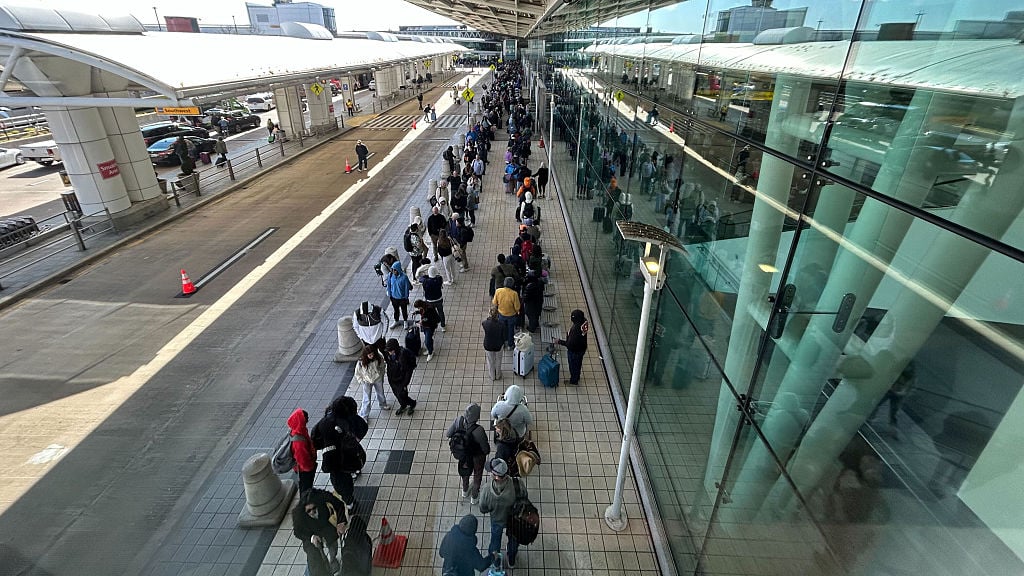
During Sunday news appearances, Homan noted that ICE’s presence at American airports depends on how many TSA agents return to work. Over 500 TSA workers have resigned since a partial government shutdown began in February, sparked by a funding dispute for the TSA’s parent agency, the Department of Homeland Security. Thousands of TSA employees—deemed essential workers required to work without pay during the shutdown—called in sick, with many taking on other jobs to make ends meet, leaving travelers stuck in lengthy queues at airport security checkpoints.
Congress remains deadlocked over DHS funding, as Democrats and Republicans debate immigration enforcement reforms. However, President Donald Trump, who had earlier ordered ICE agents deployed to ease disruptions to U.S. travel and pressure Democrats into a deal, announced late last week that he would fund the TSA.
But when asked on CNN’s State of the Union on Sunday whether ICE would stay at airports after TSA workers receive their pay and back pay, Homan said, “We’ll see.”
“It depends on how many TSA agents come back to work, how many have actually quit and have no plan to return,” Homan added. “I’m working very closely with the TSA administrator and the ICE director to determine which airports need what support.”
Appearing on CBS News’ Face the Nation, Homan stated that ICE’s presence in airports will continue “until the airports feel they’re at 100%, in a position to conduct normal operations,” reiterating that fewer TSA agents returning to work “means we’ll keep more ICE agents there.”
Is ICE helping?
Deploying ICE—an agency mired in controversy over its aggressive enforcement of Trump’s anti-immigration agenda—to assist with airport security operations has sparked mixed reactions. Democratic leaders have warned of ICE’s potential harsh treatment of travelers, while some passengers have noted that their presence has been helpful.
However, reports on ICE’s effectiveness have also been conflicting. After the plan was announced, the union representing TSA workers warned that ICE agents lacked proper training to substitute for TSA duties. Days after ICE was deployed to U.S. airports on March 23, the Washington Post reported that the immigration agents’ presence had not reduced queues, citing data from affected airports where some travelers spent four or more hours clearing security.
Even White House Press Secretary Karoline Leavitt acknowledged on March 25 that airport wait times had not decreased “as much as we’d hoped,” despite ICE’s assistance.
Several TSA agents interviewed by TIME suggested that ICE agents sometimes hindered actual operations. One TSA agent from LaGuardia told Curbed that some ICE officers were “getting paid to do nothing” at airports.
Homan, however, has defended ICE’s presence at airports. “The wait lines have shortened. I was in Houston—lines were cut by about half. We sent additional agents to Baltimore yesterday to bring those lines down.” The Baltimore-Washington International Airport said wait times at security checkpoints “improved significantly” on Sunday, though it did not credit ICE for the improvement and still advised travelers to arrive 3 hours before their scheduled departures.
“I can understand the TSA union’s stance,” Homan said amid criticism of ICE handling airport duties. “They want to be paid. They’re frustrated. But the reality is, in every location we’ve deployed ICE officers, the lines have gotten shorter. And they need to get even shorter.”
This article is provided by a third-party content provider. SeaPRwire (https://www.seaprwire.com/) makes no warranties or representations regarding its content.
Category: Top News, Daily News
SeaPRwire provides global press release distribution services for companies and organizations, covering more than 6,500 media outlets, 86,000 editors and journalists, and over 3.5 million end-user desktop and mobile apps. SeaPRwire supports multilingual press release distribution in English, Japanese, German, Korean, French, Russian, Indonesian, Malay, Vietnamese, Chinese, and more.

