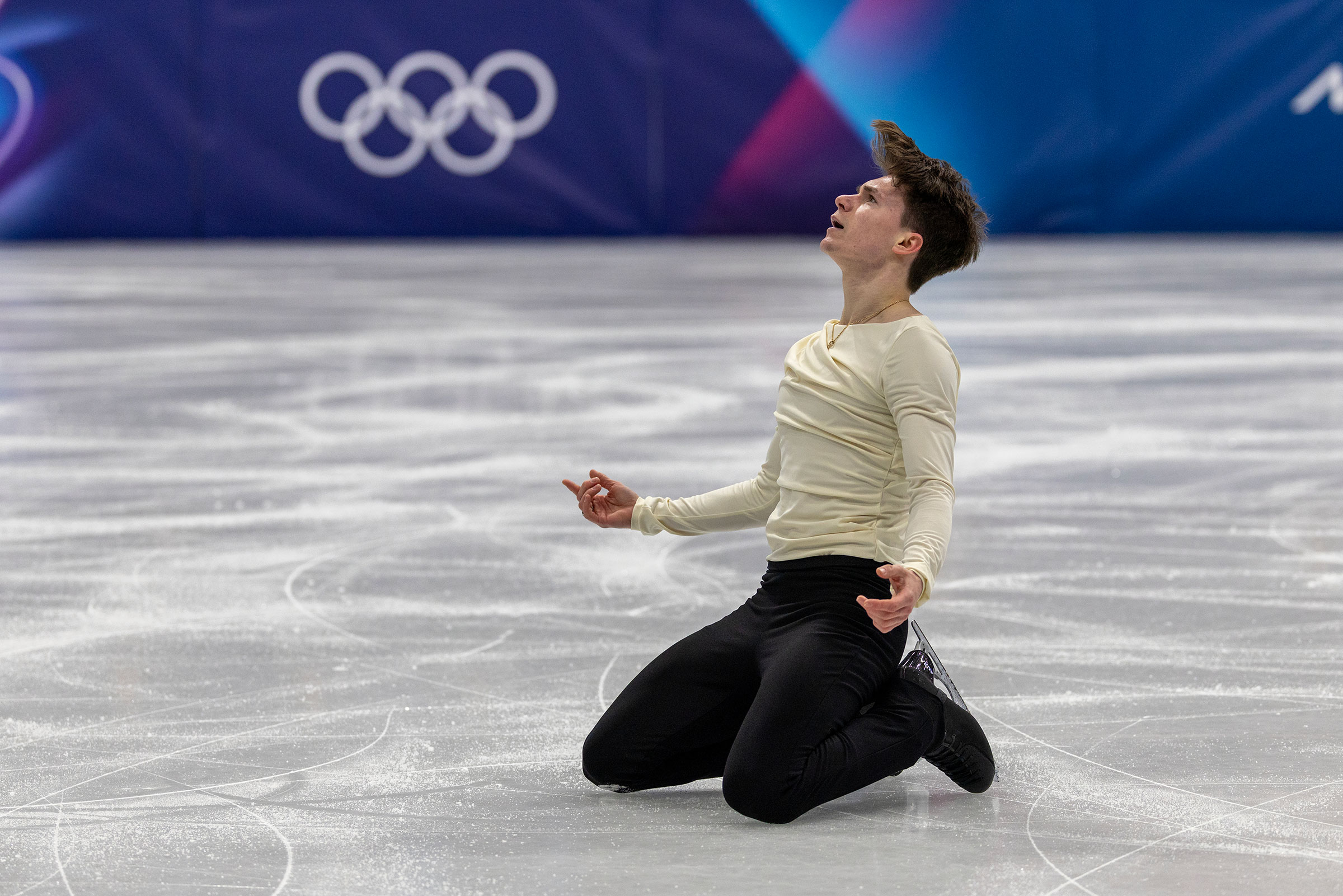
Athletes at the Olympics always face pressure, but for , that pressure vanished entirely just before he stepped onto the ice for the men’s short program at the Milano Ice Skating Arena on February 10.
“This competition felt completely different,” he told TIME after a practice session two days post-event. “The stakes are obviously high, and it’s the biggest stage there is, but honestly, I felt calm and at ease.”
Naumov’s parents—Evgenia Shishkova and Vadim Naumov—passed away in January 2025 when their in Washington, D.C., as they were returning home from a skating competition. Both were also his coaches, and for months after their deaths, Naumov wasn’t certain he’d ever compete again.
was a goal for the entire family, and one of Naumov’s final conversations with his parents centered on their plan to make that a reality for Milan.
Now that he’s at the Olympics, the weight of those expectations—plus the emotional grief he’s still working through following his parents’ deaths—could easily overwhelm him. But those things didn’t seem to burden Naumov at all during . Instead, he felt a sense of peace: a calm he’s chased throughout his career but only experienced “in bits and pieces. I never let myself fully embrace that feeling or accept it,” he says. “But here, I want to lean into it more—just relax, enjoy the experience, and let my body take over.”
“Emotionally, he’s stronger now than he was at the start of last year,” says his coach Vladimir Petrenko. Petrenko and his wife Elena were close friends of Naumov’s parents and stepped in to support him—both on and off the ice—over the past year. “[The grief] will never disappear, of course, but he can manage it, or we can manage it together.”
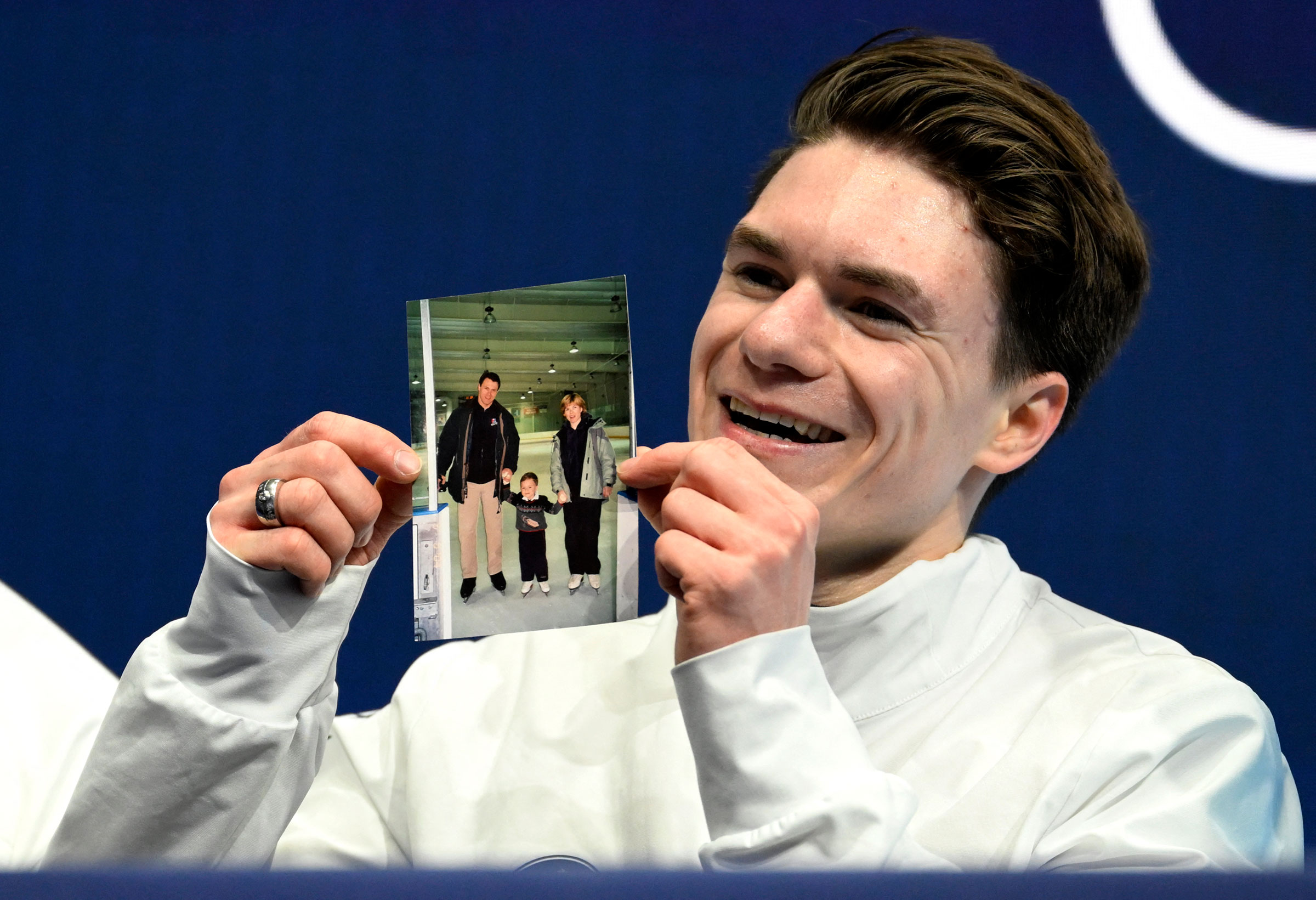
“I felt their presence the entire time,” Naumov says. He described feeling as if his parents were guiding him—like a chess piece on a board—from one element to the next. “I was just talking to them, saying, ‘Man, look what we did. Look at what we’ve accomplished.’ Moments like that really help me feel closer to them.”
Shishkova stopped watching her son compete in person once he reached the juvenile level—because it made her far too anxious. The more significant the competition, and the higher he climbed in rankings, the farther away she’d wait. At first, she stood outside the arena; later, she stayed in the hotel. “She loved and cared for me so deeply that watching was really hard for her,” he says. “I remember her saying, ‘When you’re out there, I can’t do anything, I can’t say anything, I can’t fix anything. It’s just you.’ But I felt her support regardless of whether she was there or not.”
Naumov placed 14th in the short program, which secured his spot in the free program on February 13. After the arena lights’ glare and the competition’s adrenaline faded, and he was back in his room in the , “I had a one-on-one moment with them, and it made me feel really good and happy,” he says. “Once things calm down and clear up, you get a moment of clarity where you can focus intentionally on your thoughts. They’re usually the first thing I think about. It’s obviously a bittersweet moment, but it’s something that helps drive me forward and gives me positive thoughts for today and tomorrow. So we’ll try to keep that energy going.”


