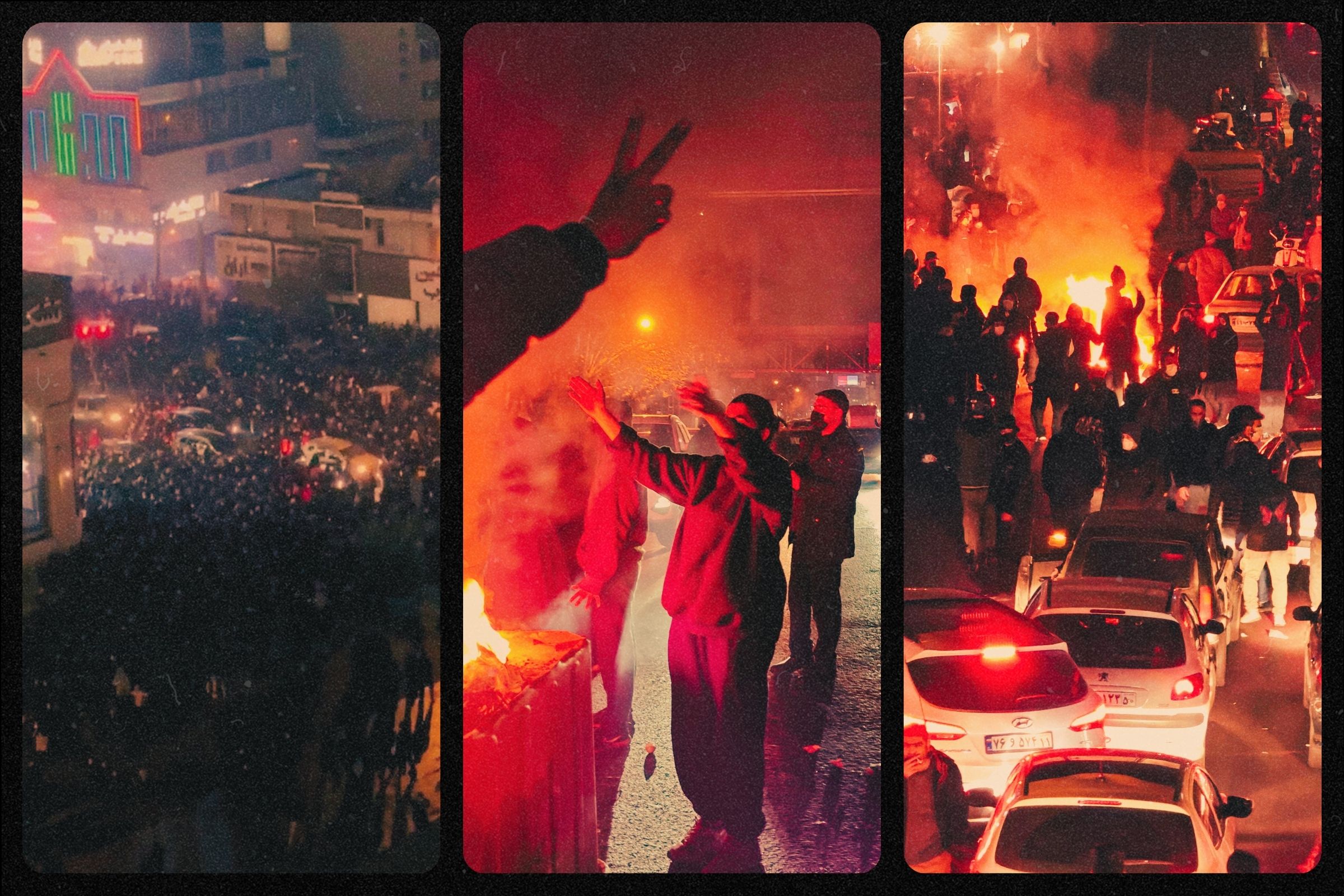
The leaders of Iran’s Islamic Republic rose to power in 1979 following millions of everyday people taking to the streets to call for the ousting of a tyrannical regime. Looking out their windows in the , they fully understood what was unfolding on the avenues and boulevards.
They also knew how to empty those streets.
On January 8, Iranian officials cut off internet access and issued directives to security forces. What ensued was one of the most severe gunfire massacres since World War II. In Tehran alone, thousands lost their lives. While the exact number of casualties is hard to confirm, Iranian health officials tell TIME that the figures may be far higher than most projections, with in the capital over 48 hours.
President Donald Trump had pledged that the U.S. would “come to the rescue”; . The regime declared success. As January drew to a close, the President referenced the U.S.S. Abraham Lincoln aircraft carrier group and pushed the ayatollahs for “a deal.” Iranians tallied their dead.
In the following pages, five Iranian writers examine the condition of the nation they yearn to return to. Known as Persia for most of its 2,600-year history, it has been the Islamic Republic of Iran for fewer than 50 years—a radical, disastrous experiment in governance whose final moments will be shaped by ordinary people now forced indoors by truck-mounted machine guns.
At the same time, Iran’s economy is collapsing. And the tyrants are afraid. As an exiled journalist stated in 2022, during the last time Iranians reclaimed public spaces: “I don’t know if this is the final episode of the Islamic Republic. But it’s the final season.”

