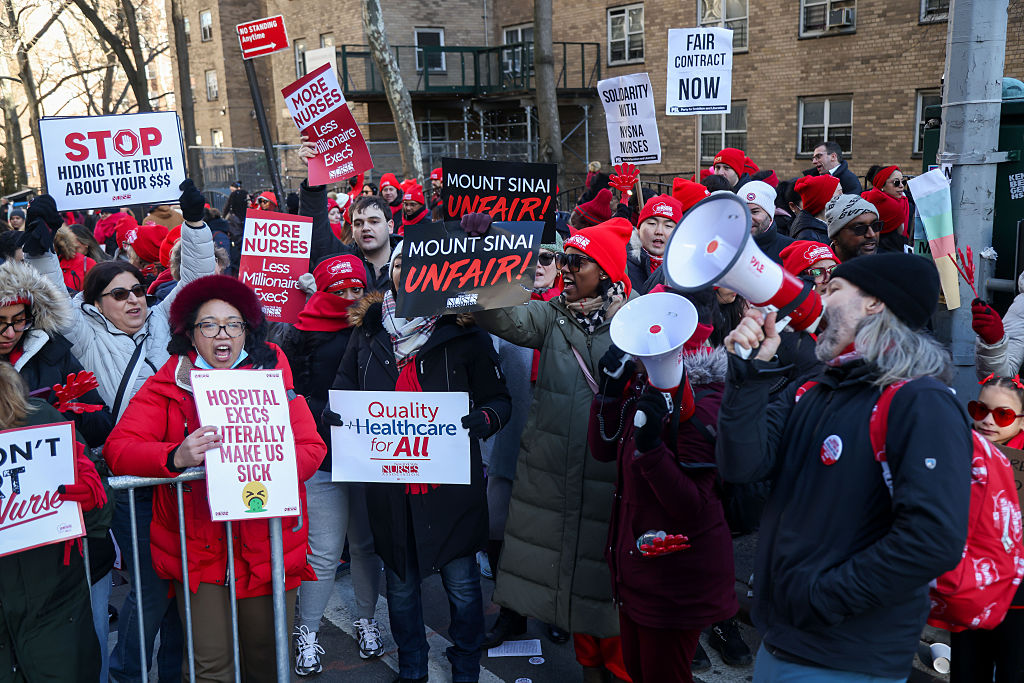
Nearly 15,000 nurses at multiple major New York hospitals have walked off the job, sparking concerns regarding potential impacts of staffing shortages on the city’s healthcare system.
The walkout started Monday morning following months of stalled contract negotiations, according to the New York State Nurses Association (NYSNA). The action is affecting several of the city’s leading medical facilities: Mount Sinai Hospital, Mount Sinai Morningside and West, NewYork-Presbyterian Hospital, and Montefiore Medical Center.
Below is key information about the developing situation.
Why are nurses on strike?
While specific demands differ across the various facilities, the nurses’ union stated broadly that members are seeking better staffing ratios, enhanced health benefits, and stronger safeguards against workplace violence.
“Hospital management refuses to address our most important issues—patient and nurse safety,” NYSNA President Nancy Hagans said in a . “It is shameful that the city’s richest hospitals refuse to continue healthcare benefits for frontline nurses, refuse to staff safely for our patients, and refuse to protect us from workplace violence.”
“Nurses do not want to strike,” Hagans continued, “but our bosses have forced us out on strike.”
However, hospital administrators have deemed some union demands too costly, while defending current nurse compensation. A Mount Sinai spokesperson told that nurses there earn an average of $162,000 annually, and that meeting NYSNA’s proposals would increase that figure to $275,000 within three years.
“The health care system is under siege financially,” Kenneth E. Raske, the president of the trade group Greater New York Hospital Association, told the Times. “The demands of the union are so outrageous that there is no way they can concede to what the union is asking for.”
What could the strike mean for patients?
In preparation for the strike, New York Governor Kathy Hochul issued an executive order on Friday, declaring a “disaster emergency” across several counties in and around the city. The order cited anticipated “severe staffing shortages” that she warned would “affect the availability and provision of care, endangering public health and safety.”
The executive order highlighted that hospital burdens could worsen due to a recent spike in influenza cases. On Thursday, the New York City Health Department reported that over 128,000 flu cases have been documented in the city since flu season started, part of a broader increase in infections and hospitalizations linked to a new influenza A variant. While the department observed a two-week drop in new cases after a peak week in December, it warned residents that “flu season is far from over.” On Friday, the CDC also issued guidance about continued risks, stating that “high influenza activity is likely to persist for several more weeks.”
The hospitals impacted by the strike remain operational and have brought in travel nurses to temporarily fill in for striking workers. However, the walkout may force affected facilities to transfer patients to other institutions and postpone or cancel surgical procedures due to inadequate staffing.


